Support Center

Download White Paper
HDR Imaging for Automotive Sensing Applications
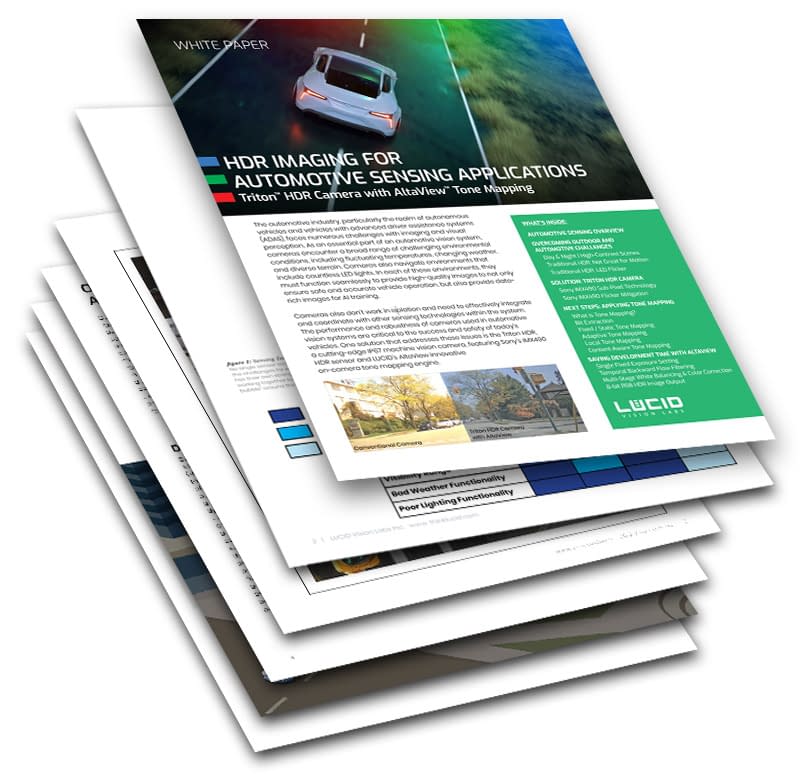
The automotive industry, particularly the realm of autonomous vehicles and vehicles with advanced driver assistance systems (ADAS), faces numerous challenges with imaging and visual perception. As an essential part of an automotive vision system, cameras encounter a broad range of challenging environmental conditions, including fluctuating temperatures, changing weather, and diverse terrain. Cameras also navigate environments that include countless LED lights. In each of these environments, they must function seamlessly to provide high-quality images to not only ensure safe and accurate vehicle operation, but also provide data-rich images for AI training.
What’s Inside:
• Automotive Sensing Overview
• Overcoming Outdoor and Automotive Challenges
• Day & Night | Traditional HDR
• Solution: Triton HDR Camera
• Sony IMX490 Technology
• Next Steps: Applying Tone Mapping
• What is Tone Mapping? | Tone Mapping Examples
• Saving Development Time with AltaView
• Features and Benefits of AltaView
Sneak Peek
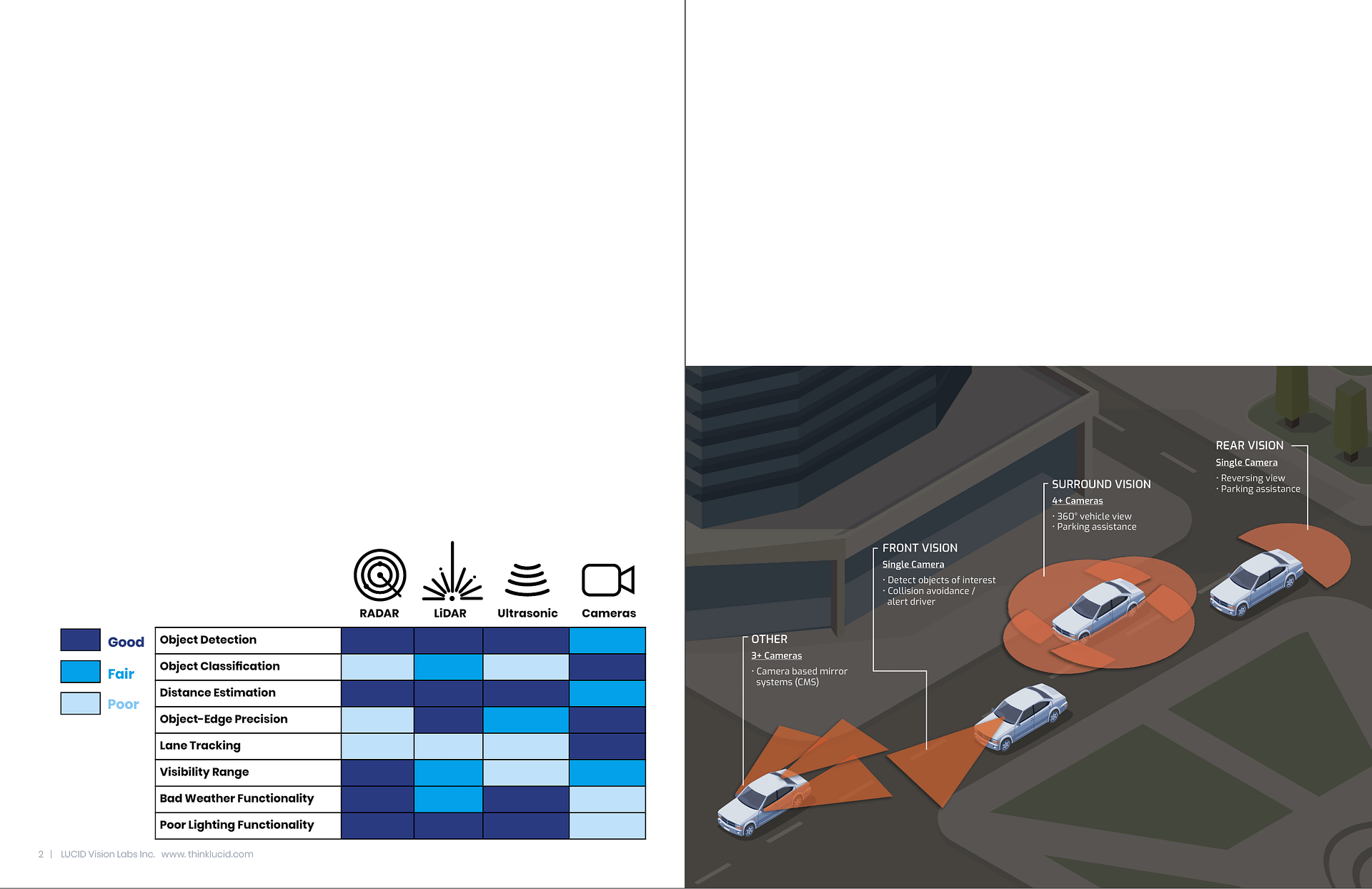
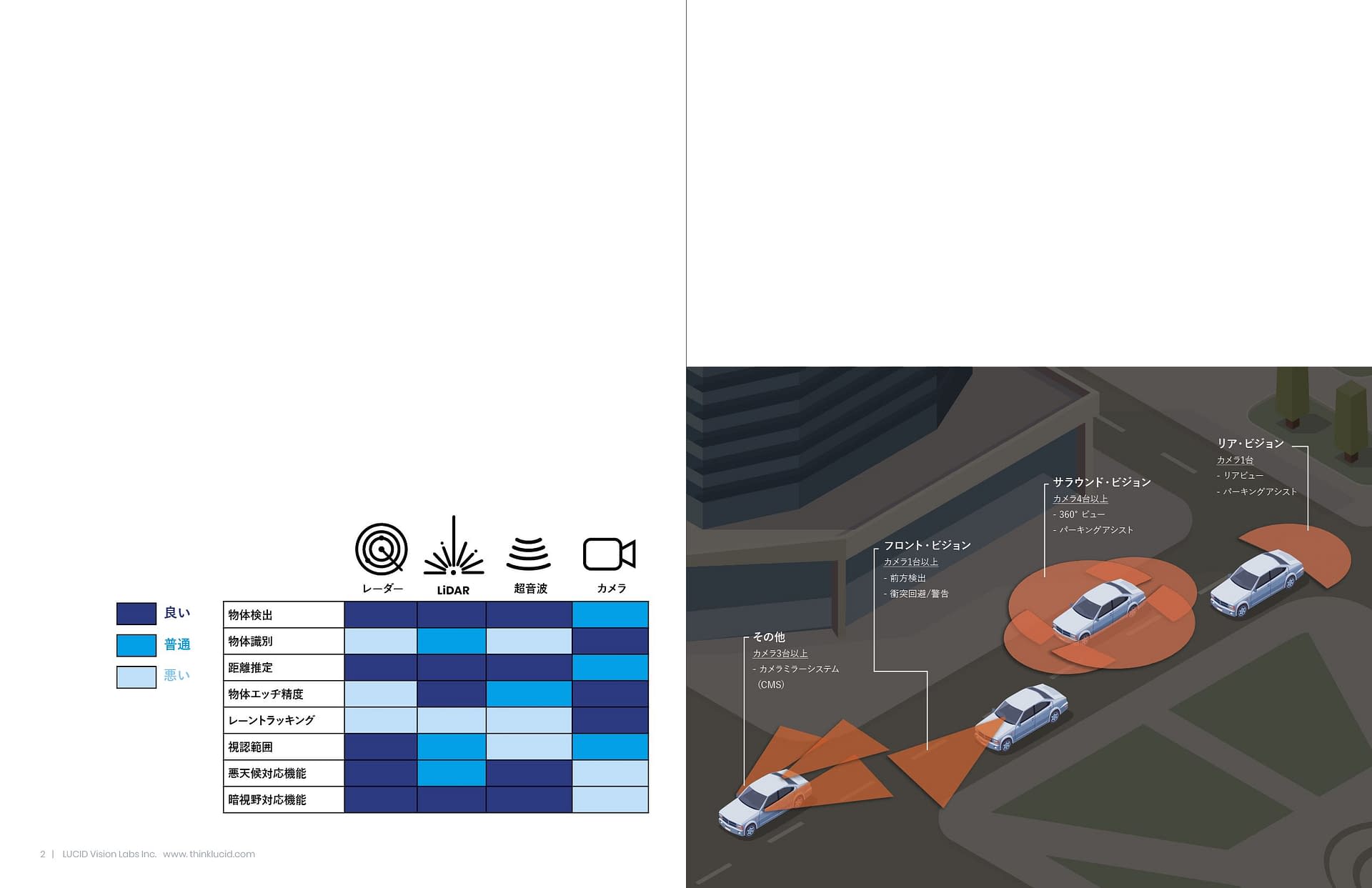
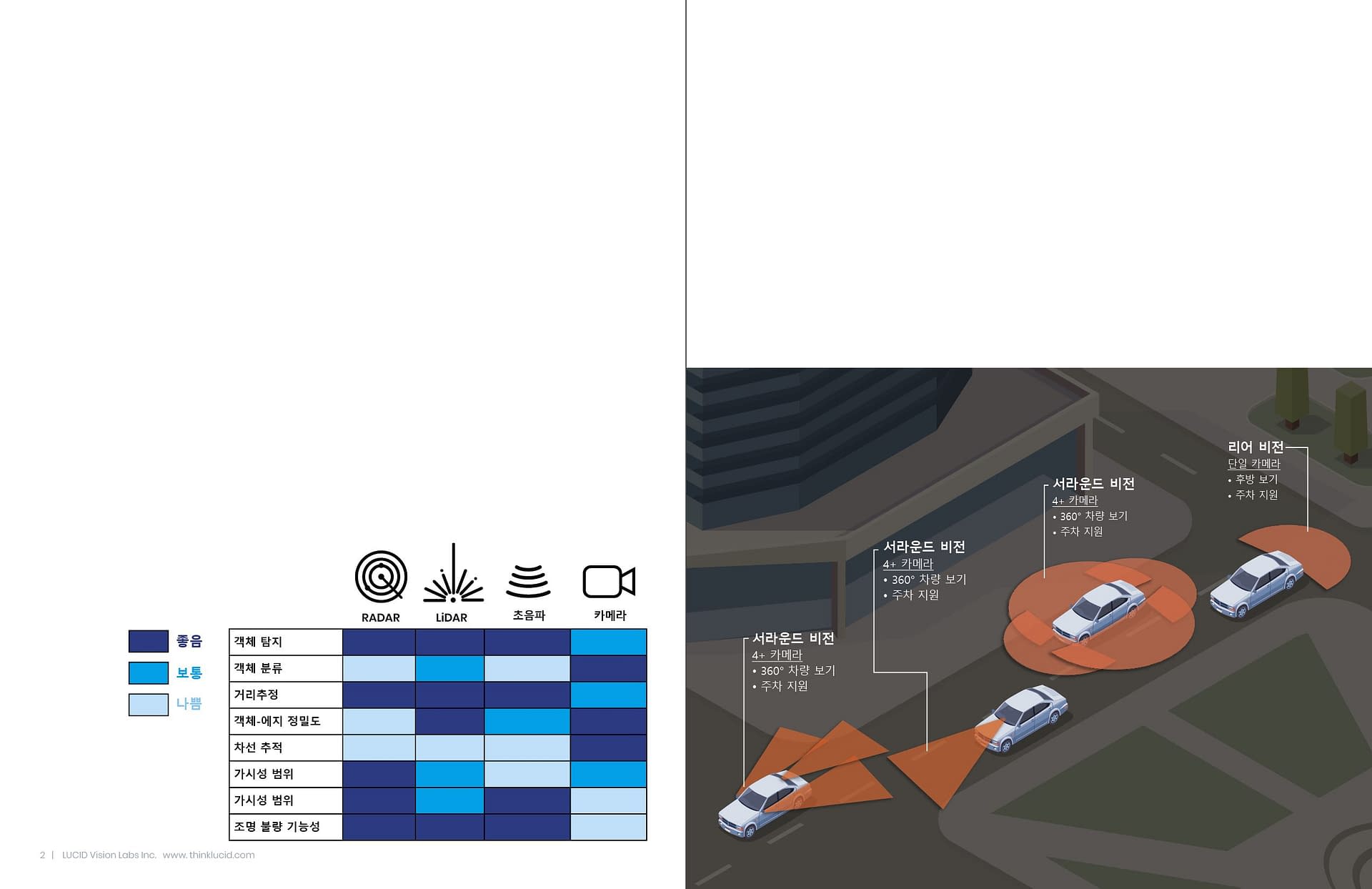
• LiDAR (Light Detection and Ranging) uses light in the form of a pulsed laser to measure variable distances. This technology offers high-resolution, 3D information about the surrounding environment, enabling the detection and localization of objects with great precision.
• Ultrasonic sensors, or sonar, send short bursts of sound waves to measure close-proximity objects, and is mainly used for parking assistance and blind-spot detection.
• Cameras, including conventional, infrared, and high dynamic range (HDR) versions, capture detailed visual information, making them essential for tasks like lane detection, traffic sign recognition, and pedestrian detection. Furthermore, camera data can be combined with RADAR /LiDAR information. While RADAR and LiDAR identify an object’s size and location, cameras offer additional contextualization by recognizing textures, such as road signs, for enhanced classification.
For autonomous vehicles and Advanced Drivers Assistance Systems (ADAS), cameras play a critical role in automotive vision systems. In particular, HDR cameras provide more data-rich imaging compared to conventional cameras. However, selecting an HDR camera built to tackle the specific outdoor and automotive challenges is a complex decision requiring deeper consideration. This white paper focuses on the challenges and solutions camera technologies can provide for automotive applications.
No single sensor technology can solve all the challanges for ADAS. Each technology has their own strengths, with all of them working together to form a “safety bubble” around the vehicle.