백서 다운로드

자동차 감지 애플리케이션용 HDR 이미징

AltaView™ 톤 매핑 기능이 있는 Triton™ HDR 카메라
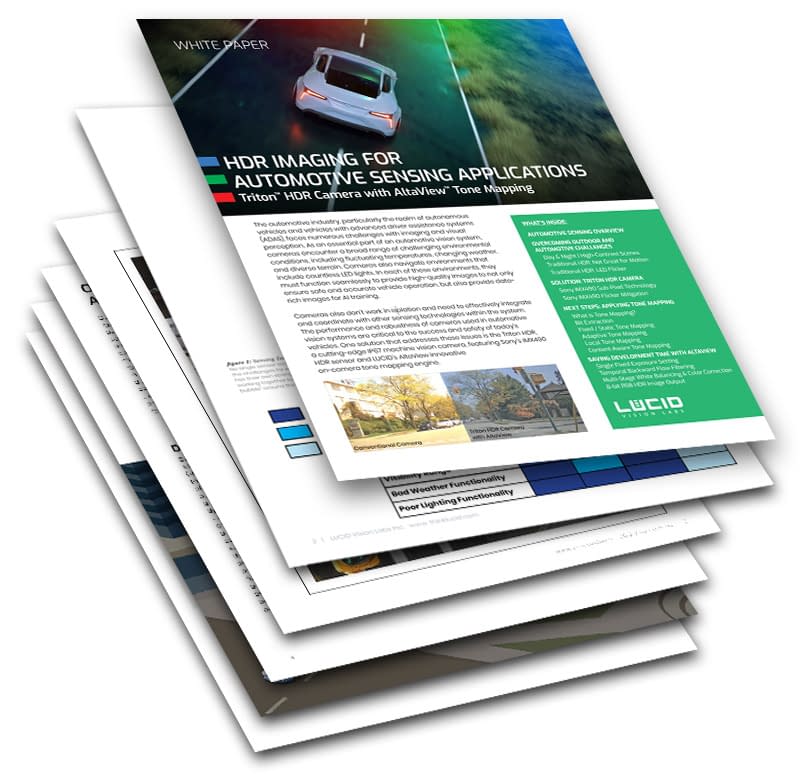
HDR Imaging For Automotive Sensing Applications White Paper PDF

자동차 산업, 특히 자율주행차와 첨단 운전자 보조 시스템(ADAS)을 갖춘 차량 분야는 이미징 및 시각적 인식과 관련하여 수많은 과제에 직면해 있다. 자동차 비전 시스템의 필수 부분인 카메라는 온도 변화, 날씨 변화, 다양한 지형 등 다양하고 까다로운 환경 조건에 직면한다. 카메라는 또한 수많은 LED 조명이 포함된 환경을 탐색한다. 이러한 각 환경에서 카메라는 안전하고 정확한 차량 작동을 보장할 뿐만 아니라 AI 학습을 위한 풍부한 데이터 이미지를 제공하기 위한 고품질 이미지를 제공하기 위해 원활하게 작동해야 한다.

내용:

• 자동차 감지 개요
• 실외 및 자동차 관련 과제 극복
• 주야 고대비 장면
• 해결방안: TRITON HDR 카메라
• 다음 단계: 톤 매핑 적용
• 톤 매핑이란?
• ALTAVIEW로 개발 시간 절약

“정보 제출”을 클릭하면 다운로드 링크가 제공됩니다.
(영어, 일본어, 한국어 PDF 다운로드 가능)

미리보기

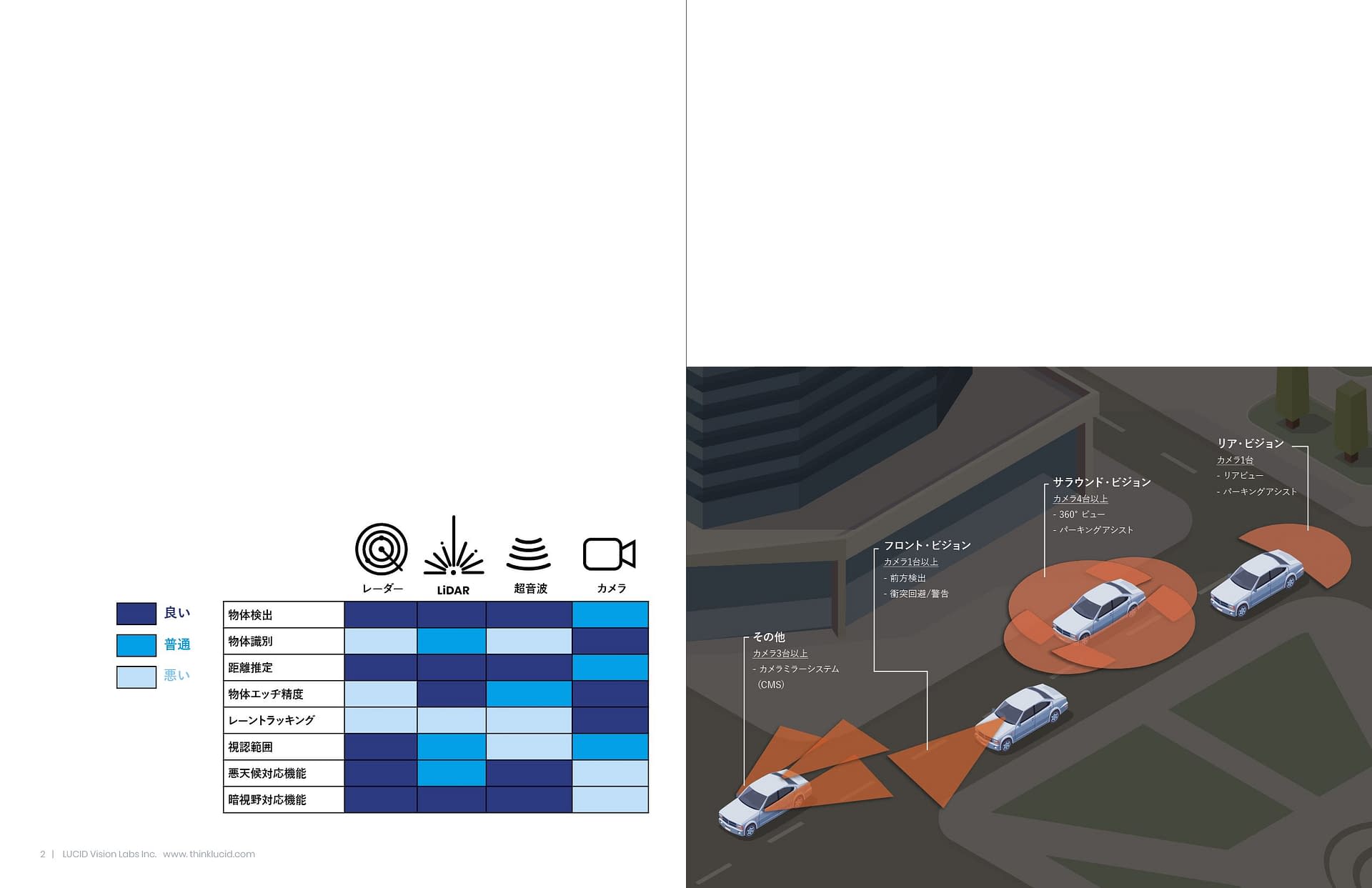
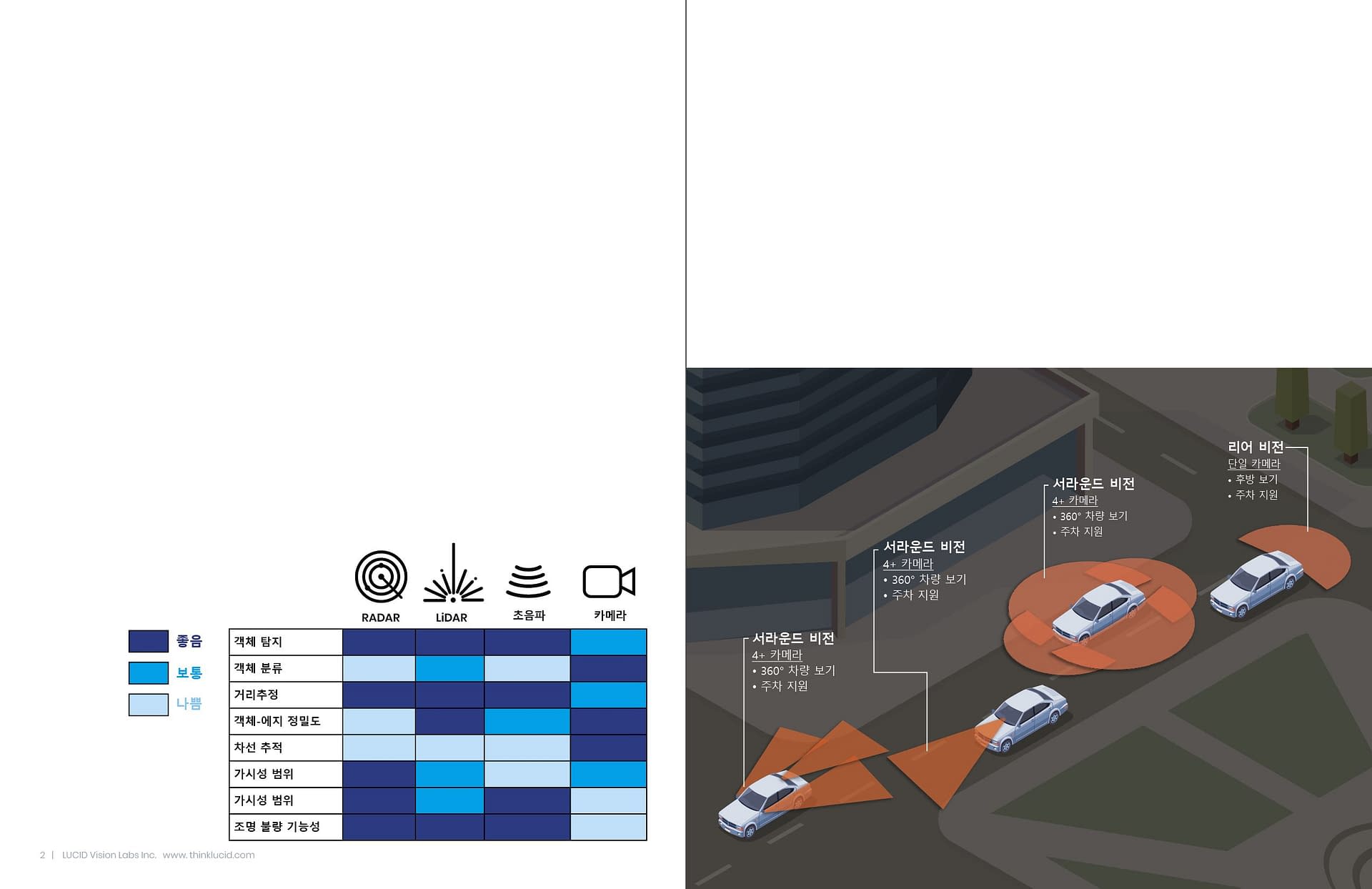
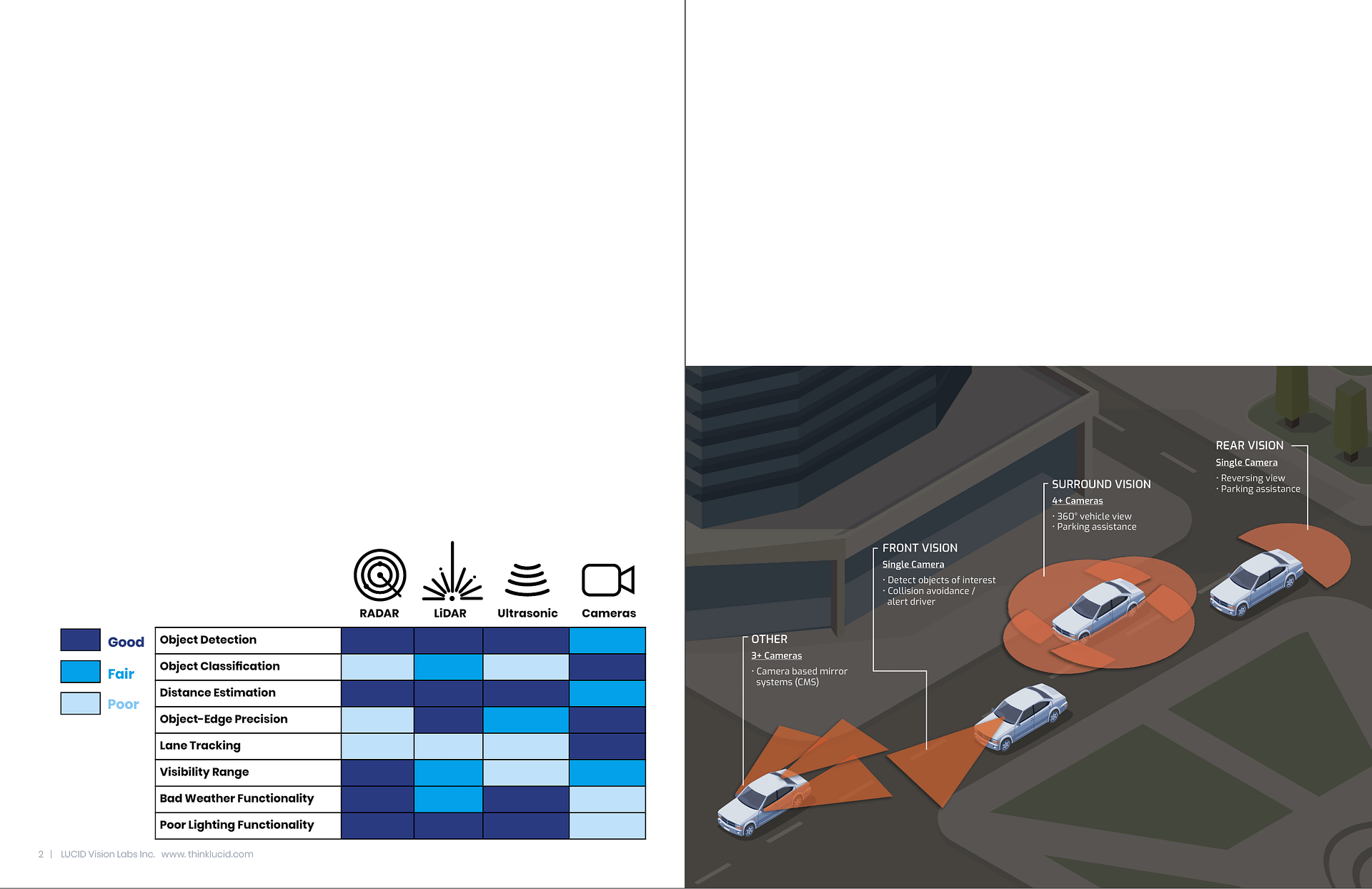
Surviving Industrial Challenges To build these compact embedded vision systems however, application designers must navigate the challenges of harsher operating environments and the complexities of building smaller, faster, more power efficient systems. They must work to validate their system through time-consuming stages, starting from the proof of concept (POC), to prototyping, and finally to a minimum viable product (MVP) or a Full Custom Design (FCD). Off-the-shelf embedded development kits, such as those from NVIDIA, Xilinx, or Raspberry Pi offer a quick solution to building a proof-of-concept design. However, many camera modules and embedded development boards offer little to no protection from the harsh environments of industrial spaces. A considerable amount of time must be spent on designing and testing prototypes that are protected against dust and moisture (IP67 or IP65), electromagnetic interference (EMC immunity) and ... Fill out the form above and download the full white paper A diverse array of sensors and technology is available to enable the automation of moving vehicle platforms in open, uncontrolled environments. These systems must function effectively around the clock, navigating outdoors day and night in all weather conditions. Various sensing modalities are critical to these systems,, including Radar, LiDAR, ultrasonic, and vision cameras, each contributing unique data sets to the automotive sensing system.
• RADAR provides reliable distance and speed measurements of surrounding objects, irrespective of light conditions or weather, making them valuable for detecting obstacles.

• LiDAR (Light Detection and Ranging) uses light in the form of a pulsed laser to measure variable distances. This technology offers high-resolution, 3D information about the surrounding environment, enabling the detection and localization of objects with great precision.

• Ultrasonic sensors, or sonar, send short bursts of sound waves to measure close-proximity objects, and is mainly used for parking assistance and blind-spot detection.

• Cameras, including conventional, infrared, and high dynamic range (HDR) versions, capture detailed visual information, making them essential for tasks like lane detection, traffic sign recognition, and pedestrian detection. Furthermore, camera data can be combined with RADAR /LiDAR information. While RADAR and LiDAR identify an object’s size and location, cameras offer additional contextualization by recognizing textures, such as road signs, for enhanced classification.
With their complementary strengths, these sensor types are often used together in a process known as sensor fusion, which combines data from multiple sensors to gain a more complete and accurate understanding of the environment. This combination of technologies forms what is often referred to as a “safety bubble” around the vehicle, providing comprehensive, real-time information about the vehicle’s surroundings to support safe and efficient operation. With the continuous evolution of these technologies and their integration strategies, the future of automotive vision systems and autonomous vehicles shows great promise.

For autonomous vehicles and Advanced Drivers Assistance Systems (ADAS), cameras play a critical role in automotive vision systems. In particular, HDR cameras provide more data-rich imaging compared to conventional cameras. However, selecting an HDR camera built to tackle the specific outdoor and automotive challenges is a complex decision requiring deeper consideration. This white paper focuses on the challenges and solutions camera technologies can provide for automotive applications.
figure 1: Sensing Technologies for ADAS
No single sensor technology can solve all the challanges for ADAS. Each technology has their own strengths, with all of them working together to form a “safety bubble” around the vehicle.
Automotive Sensing Overview
HDR for ADAS slider-revolution 車載センシング用HDRイメージング 자동차 감지 애플리케이션용 HDR 이미징