Support Center



Sony STARVIS and STARVIS 2 Machine Vision Cameras
LUCID’s machine vision cameras featuring Sony STARVIS and STARVIS 2 CMOS sensors deliver high-sensitivity imaging for applications where lighting conditions are limited, variable, or near-infrared based. These rolling shutter sensors provide strong low-light performance, high image quality, and flexible resolution options in compact, Factory Tough™ industrial camera designs with IP67 protection for demanding environments.
Industrial Inspection
Material Handling
Transportation Systems
Safety Monitoring
Built for Challenging Imaging Conditions
Machine vision applications do not always operate under ideal lighting conditions. Inspection systems may need to capture detail in dim environments, monitor objects with changing illumination, or use near-infrared lighting where visible light is not practical. Sony STARVIS and STARVIS 2 CMOS sensors are designed to deliver high sensitivity and strong image quality in these challenging imaging environments, making them a valuable option for machine vision cameras used in industrial automation, logistics, traffic systems, life sciences, and other demanding applications.
High Sensitivity with Rolling Shutter Performance
At the center of STARVIS technology is a back-illuminated pixel structure that improves how efficiently light reaches the photodiode. When combined with rolling shutter sensor technology, STARVIS sensors can provide a cost-effective imaging solution with high resolution, strong low-light performance, and efficient image capture for many industrial applications. For machine vision users, this can mean clearer images with less noise, higher quantum efficiency, and improved performance when light levels are limited. The ability to capture more usable signal can help reduce the need for excessive gain, longer exposure times, or additional lighting, giving system designers more flexibility when balancing image quality, speed, and overall system cost.
Improved NIR Sensitivity with STARVIS 2
STARVIS 2 builds on this foundation with an optimized photodiode structure that improves near-infrared light absorption, helping deliver stronger sensitivity when NIR illumination is used. It also enhances performance in scenes that contain both bright and dark areas. This is useful for applications where lighting can vary across the field of view, where NIR illumination is used to improve contrast, or where image detail needs to be preserved without overexposing highlights or losing information in shadows. The result is more reliable image data for inspection, identification, measurement, and monitoring tasks.
| STARVIS | STARVIS 2 |
|---|---|
| The back-illuminated pixel structure moves the wiring layer below the pixel well, enabling more photons to be detected and significantly improving quantum efficiency and low-light sensitivity. | This back-illuminated pixel structure is further enhanced by allowing charge to accumulate on both the bottom horizontal plane and the vertical sides of the well. This increases saturation capacity, dynamic range and improves NIR sensitivity. |
LUCID Cameras with Sony STARVIS Sensors
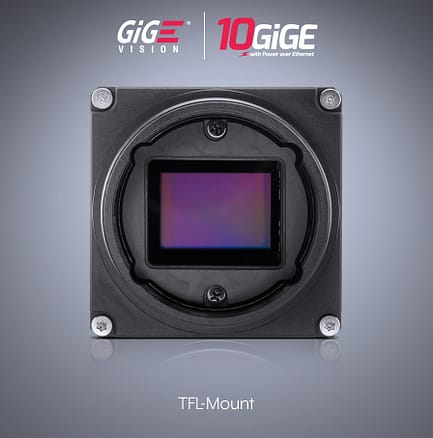
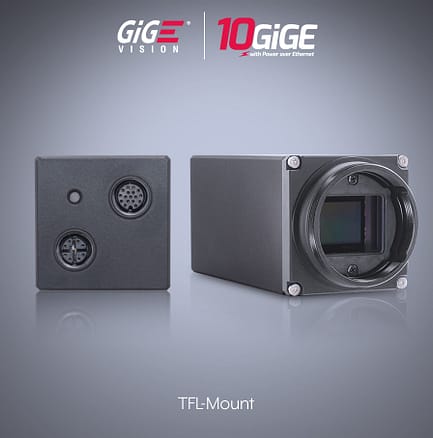
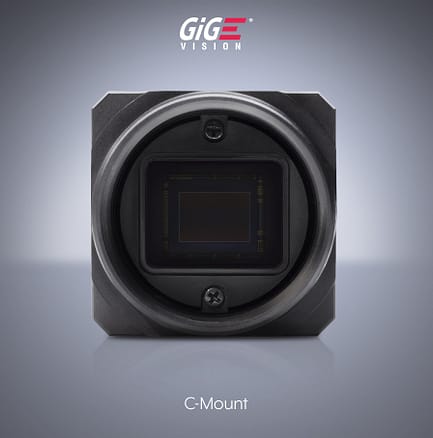
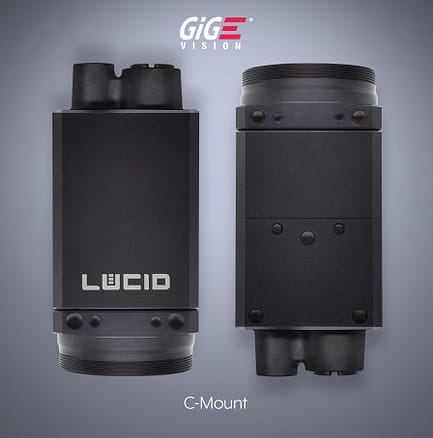
LUCID machine vision cameras with Sony STARVIS and STARVIS 2 sensors combine advanced sensor performance with compact industrial camera designs, GigE Vision interfaces, and reliable integration into machine vision systems. Whether the goal is improved low-light imaging, high dynamic range performance, NIR sensitivity, or a cost-effective rolling shutter camera solution, LUCID offers a range of STARVIS-based camera models to match different application requirements. Explore the available camera models below to compare resolution, frame rate, interface, lens mount, and sensor options.
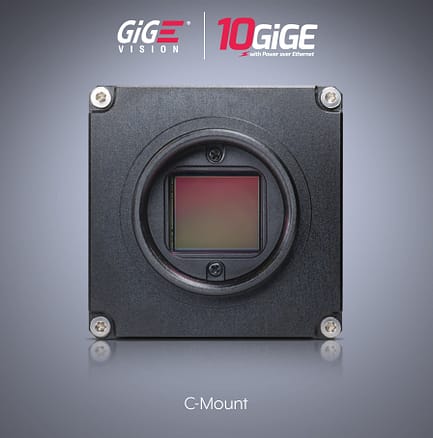
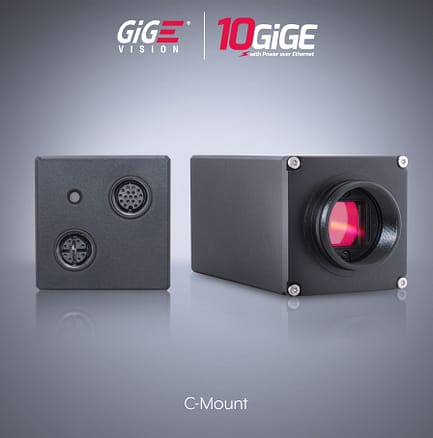
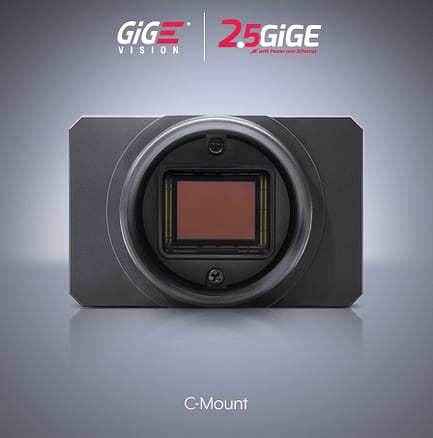
| LUCID Camera | Sensor | STARVIS Family | Highlights |
|---|---|---|---|
| Triton10 TRX260S | IMX571 | STARVIS | Large-format 26 MP sensor with 3.76 µm pixels, rolling shutter, and 16-bit A/D conversion. |
| Triton10 TRX083S | IMX585 | STARVIS 2 | 8.3 MP / 4K-class sensor with 2.9 µm pixels, strong low-light and NIR performance. |
| Triton2 TRT126S, Triton TRI126S |
IMX676 | STARVIS 2 | 12.6 MP square-format sensor with 2.0 µm pixels and STARVIS 2 sensitivity improvements. |
Example STARVIS 2 - EMVA 1288 Results
The EMVA 1288 data below shows image quality results from a LUCID camera using the Sony IMX585 CMOS sensor (mono and color versions). These measurements provide insight into key performance characteristics such as quantum efficiency, dynamic range, SNR, saturation capacity, and temporal dark noise, and are representative of the type of sensor-level performance data available for selected STARVIS and STARVIS 2 machine vision cameras.
TRX083S-M (Mono. Sony IMX585 CMOS)
| Mono EMVA 1288 Results | |
|---|---|
| Dynamic Range | 74.5 dB |
| SNR (Max) | 45.83 dB |
| Saturation Capacity | 38250 e- |
| Absolute Sensitivity Threshold (Measured at 527.5nm) | 7.35 γ |
| Temporal Dark Noise | 6.15 e- |
| Gain | 0.10 DN / e- |
| Dark Current | 1.18 e- / s |
| Dark Signal Non-Uniformity | 0.37 e- |
| Photo Response Non-Uniformity | 0.33 % |
| Linearity Error Max/Min | 0.33/-0.53 % |
TRX083S-C (Color. Sony IMX585 CMOS)
| Color EMVA 1288 Results | |
|---|---|
| Dynamic Range | 74.2 dB |
| SNR (Max) | 45.75 dB |
| Saturation Capacity | 37565 e- |
| Absolute Sensitivity Threshold (Measured at 527.5nm) | 8.58 γ |
| Temporal Dark Noise | 6.19 e- |
| Gain | 0.10 DN / e- |
| Dark Current | 1.15 e- / s |
| Dark Signal Non-Uniformity | 0.36 e- |
| Photo Response Non-Uniformity | 0.38 % |
| Linearity Error Max/Min | 0.29/-0.45 % |
Applications
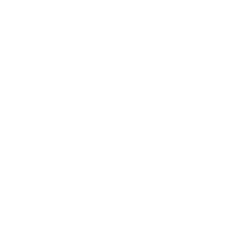
Industrial Inspection
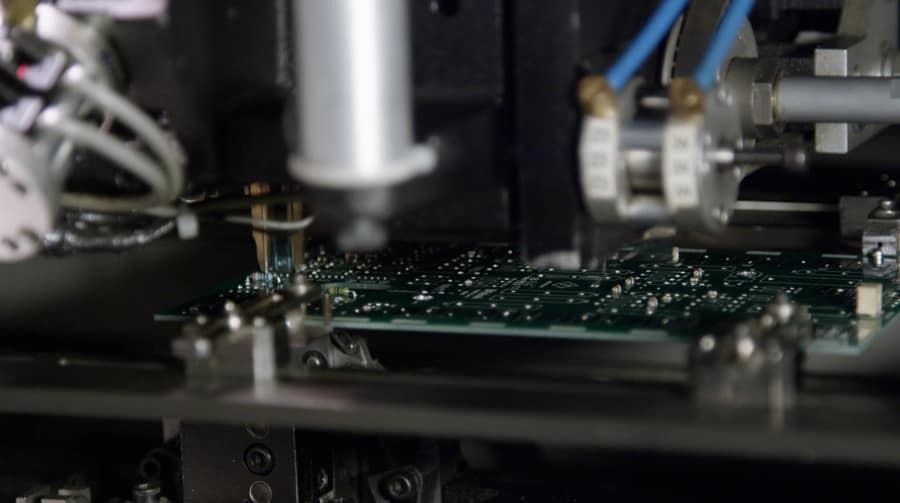
High-sensitivity rolling shutter cameras are well suited for inspection tasks where parts are stationary, indexed, or moving at controlled speeds. Stationary or indexed PCB / electronics assembly inspection, component presence checks, label verification, and surface inspection where STARVIS cameras can capture precise imaging data.
Material Handling
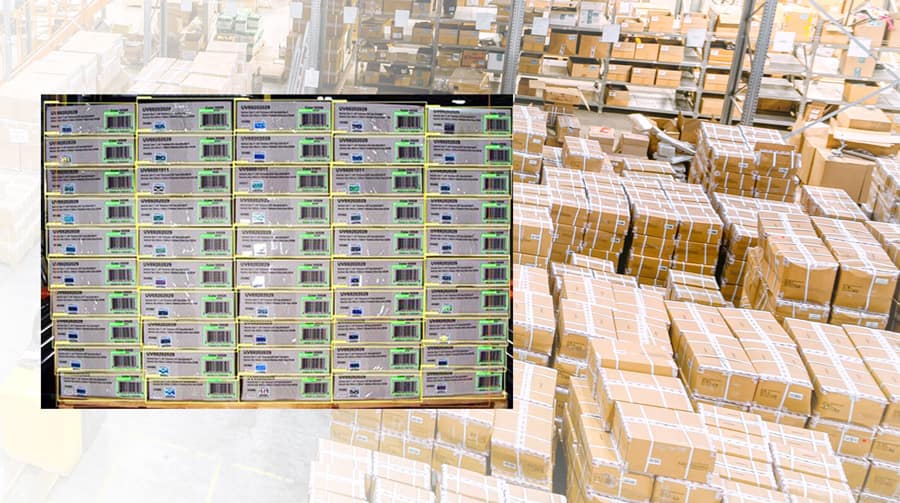
Strong low-light and NIR sensitivity can help maintain image quality in warehouse and loading dock environments where lighting may be limited or inconsistent. These cameras are well suited for applications such as package identification, barcode reading, label verification, box counting, and pallet inspection on slower or controlled conveyors.
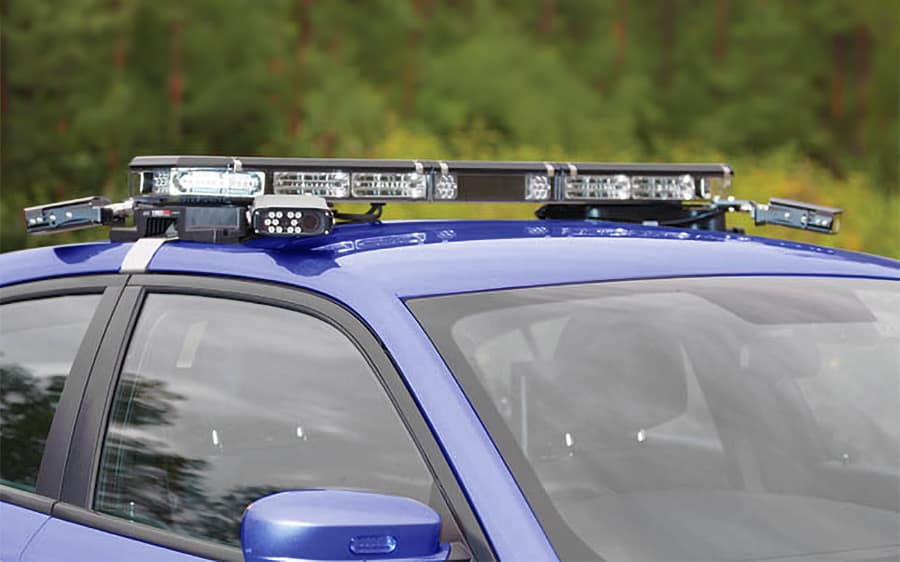
Transportation Systems, ITS
LUCID cameras with STARVIS sensors can support applications such as vehicle identification, license plate recognition, parking access control, tolling, and traffic monitoring where vehicles are stopped, slowing down, or moving through a controlled imaging zone.
Safety Monitoring
High-sensitivity cameras can support industrial safety monitoring in work cells, loading docks, equipment areas, and automated production zones where the goal is to monitor presence, position, or activity rather than capture high-speed motion. Their low-light and NIR response can help maintain image quality in dim areas or when supplemental near-infrared illumination is used.