
ホワイトペーパーをダウンロード

車載センシング用HDRイメージング

AltaView™ トーンマッピング搭載 Triton™ HDRカメラ
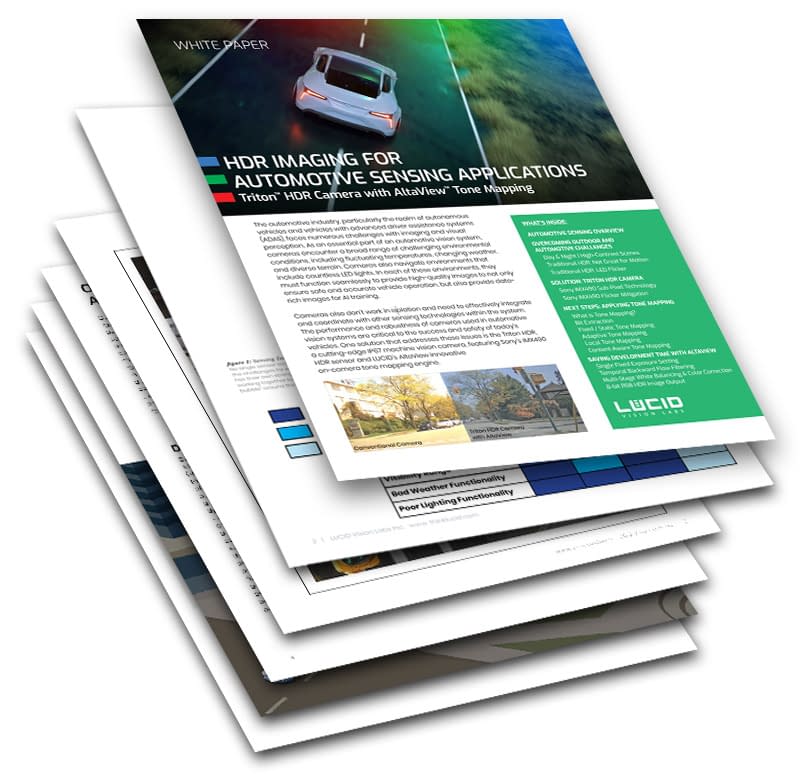
HDR Imaging For Automotive Sensing Applications White Paper PDF

自動車業界、特に自律走行車や先進運転支援システム(ADAS)搭載車の領域では、画像処理と視覚認識に関して多くの課題に直面しています。車載ビジョンシステムの重要な一部として、カメラは、変動する温度、変化する天候、多様な地形など、幅広い困難な環境条件に遭遇します。また、カメラは無数のLEDライトを含む環境を移動します。これらの各環境において、カメラはシームレスに機能し、安全で正確な車両操作を保証するだけでなく、AIトレーニング用のデータリッチ画像を提供するために、高品質の画像を提供する必要があります。このような問題を解決するソリューションのひとつが、ソニーのIMX490 HDRセンサーとLUCIDの革新的なカメラ搭載のトーンマッピングエンジンAltaViewを搭載したIP67対応の最新マシンビジョンカメラTriton HDRです。

目次:

– オートモーティブ・センシングの概要
– 屋外と車載用途での課題
– デイ&ナイト|高コントラストシーン
– 解決策:Triton HDRカメラ
– ソニーIMX490サブピクセル技術
– 次のステップ トーンマッピングの適用
– トーンマッピングとは?
– AltaViewによる開発時間の短縮

送信」をクリックすると、ダウンロードリンクが表示されます。
(日本語と英語のPDFがダウンロードできます。)

プレビュー

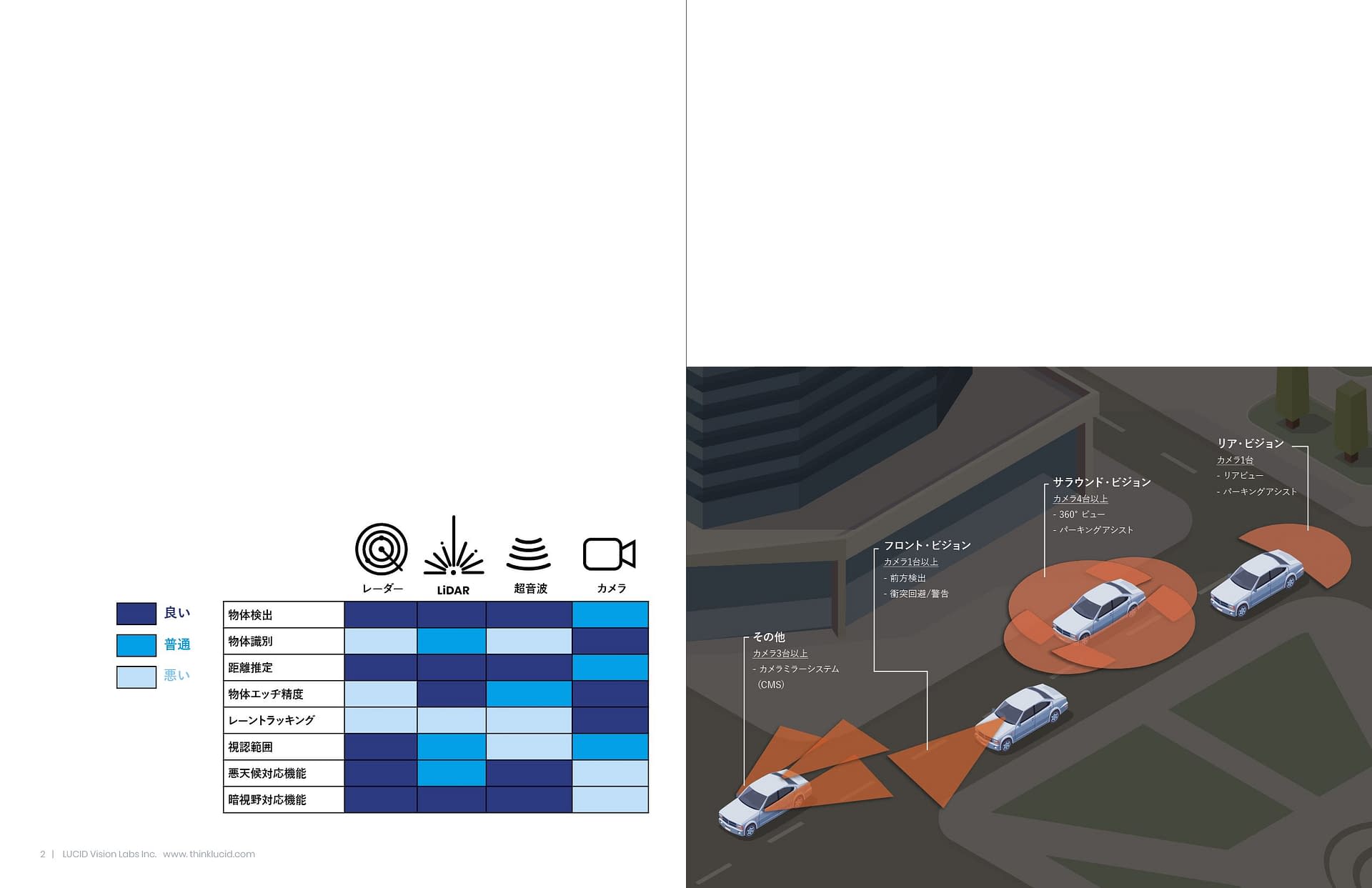
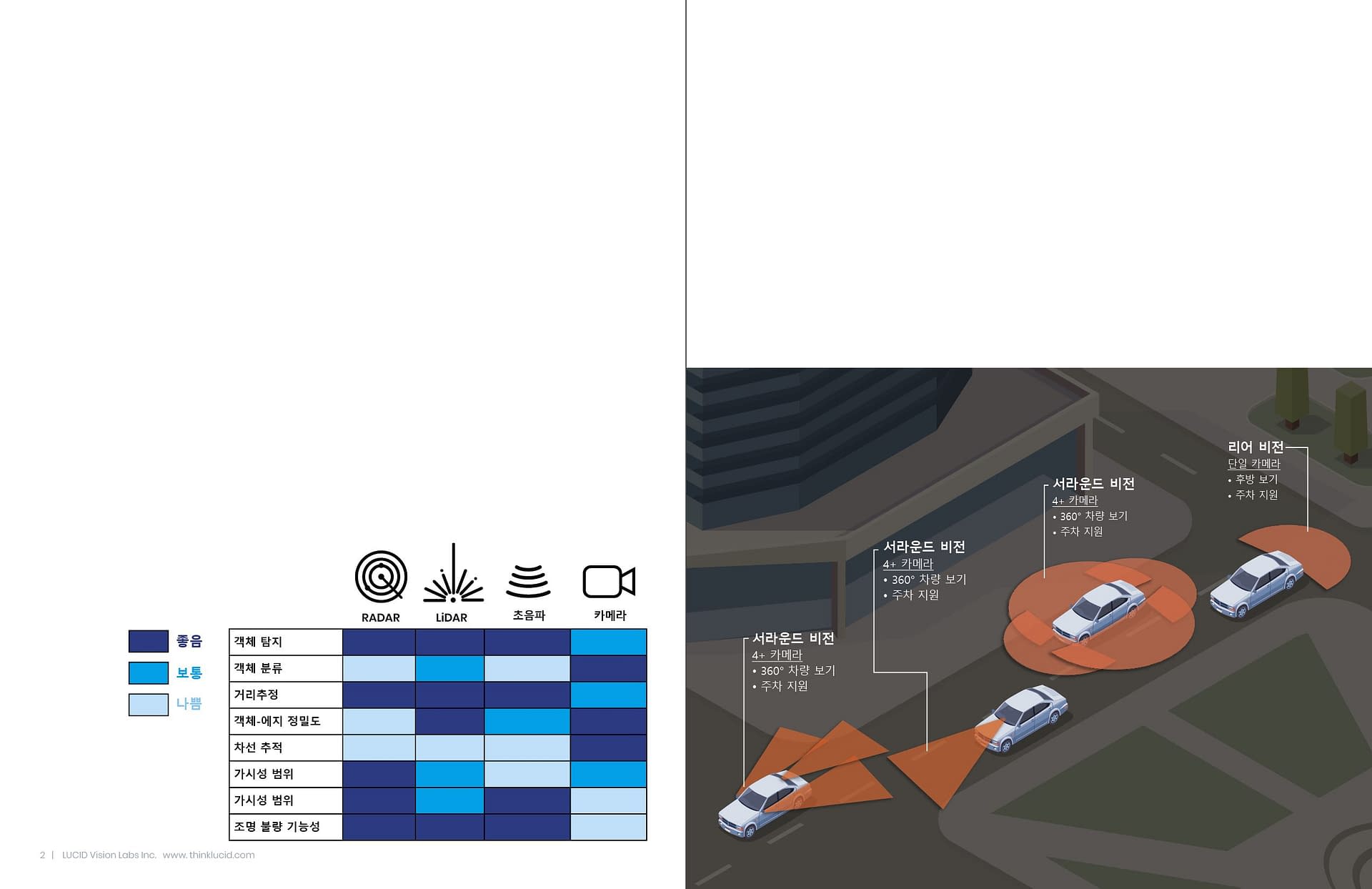
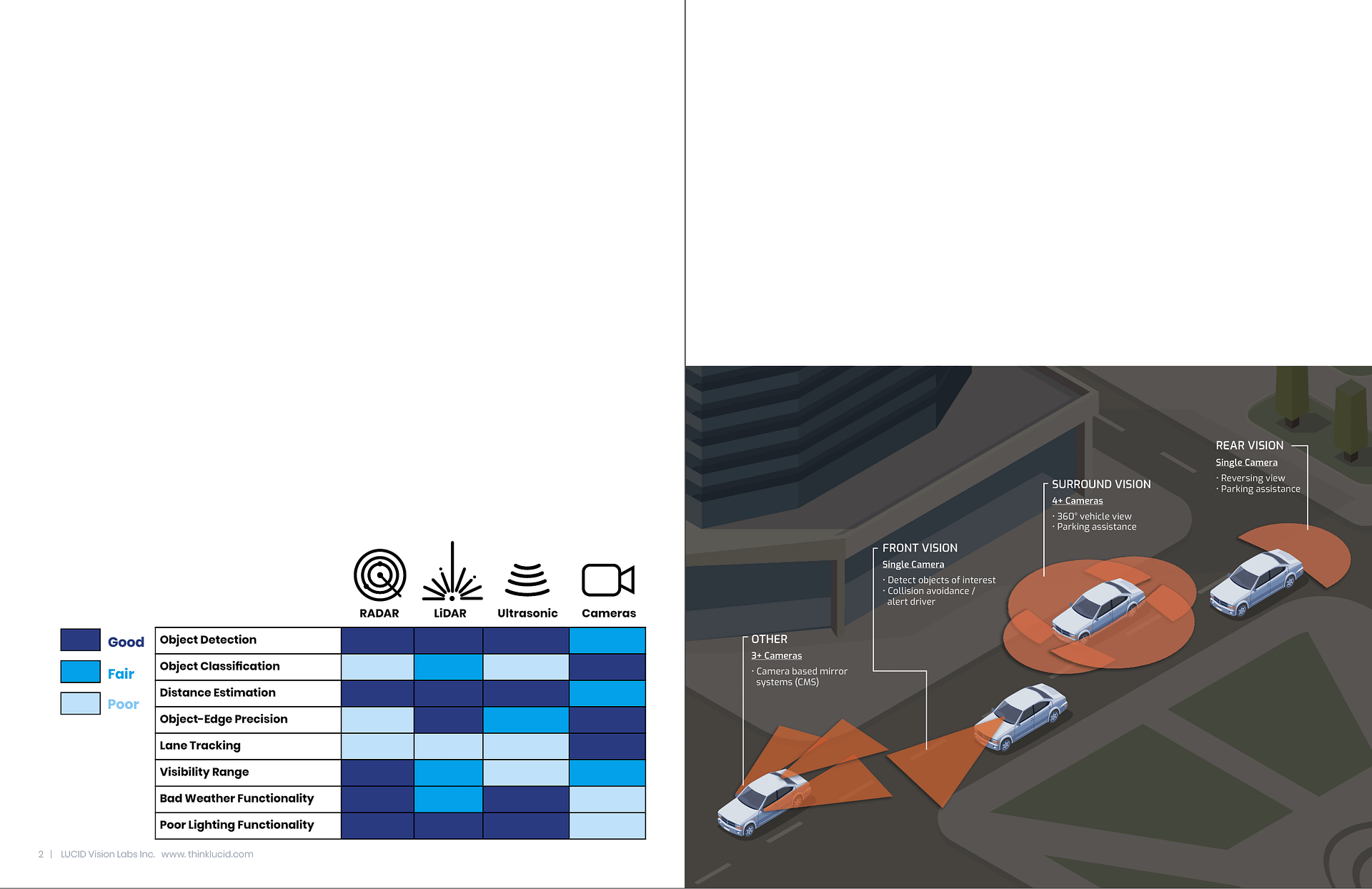
Surviving Industrial Challenges To build these compact embedded vision systems however, application designers must navigate the challenges of harsher operating environments and the complexities of building smaller, faster, more power efficient systems. They must work to validate their system through time-consuming stages, starting from the proof of concept (POC), to prototyping, and finally to a minimum viable product (MVP) or a Full Custom Design (FCD). Off-the-shelf embedded development kits, such as those from NVIDIA, Xilinx, or Raspberry Pi offer a quick solution to building a proof-of-concept design. However, many camera modules and embedded development boards offer little to no protection from the harsh environments of industrial spaces. A considerable amount of time must be spent on designing and testing prototypes that are protected against dust and moisture (IP67 or IP65), electromagnetic interference (EMC immunity) and ... Fill out the form above and download the full white paper A diverse array of sensors and technology is available to enable the automation of moving vehicle platforms in open, uncontrolled environments. These systems must function effectively around the clock, navigating outdoors day and night in all weather conditions. Various sensing modalities are critical to these systems,, including Radar, LiDAR, ultrasonic, and vision cameras, each contributing unique data sets to the automotive sensing system.
• RADAR provides reliable distance and speed measurements of surrounding objects, irrespective of light conditions or weather, making them valuable for detecting obstacles.

• LiDAR (Light Detection and Ranging) uses light in the form of a pulsed laser to measure variable distances. This technology offers high-resolution, 3D information about the surrounding environment, enabling the detection and localization of objects with great precision.

• Ultrasonic sensors, or sonar, send short bursts of sound waves to measure close-proximity objects, and is mainly used for parking assistance and blind-spot detection.

• Cameras, including conventional, infrared, and high dynamic range (HDR) versions, capture detailed visual information, making them essential for tasks like lane detection, traffic sign recognition, and pedestrian detection. Furthermore, camera data can be combined with RADAR /LiDAR information. While RADAR and LiDAR identify an object’s size and location, cameras offer additional contextualization by recognizing textures, such as road signs, for enhanced classification.
With their complementary strengths, these sensor types are often used together in a process known as sensor fusion, which combines data from multiple sensors to gain a more complete and accurate understanding of the environment. This combination of technologies forms what is often referred to as a “safety bubble” around the vehicle, providing comprehensive, real-time information about the vehicle’s surroundings to support safe and efficient operation. With the continuous evolution of these technologies and their integration strategies, the future of automotive vision systems and autonomous vehicles shows great promise.

For autonomous vehicles and Advanced Drivers Assistance Systems (ADAS), cameras play a critical role in automotive vision systems. In particular, HDR cameras provide more data-rich imaging compared to conventional cameras. However, selecting an HDR camera built to tackle the specific outdoor and automotive challenges is a complex decision requiring deeper consideration. This white paper focuses on the challenges and solutions camera technologies can provide for automotive applications.
figure 1: Sensing Technologies for ADAS
No single sensor technology can solve all the challanges for ADAS. Each technology has their own strengths, with all of them working together to form a “safety bubble” around the vehicle.
Automotive Sensing Overview
HDR for ADAS slider-revolution 車載センシング用HDRイメージング 자동차 감지 애플리케이션용 HDR 이미징